
Arabian Travel Market 2026
14 – 17 September 2026, DWTC
ATM research partners forecast resilient future for tourism as industry
looks beyond challenges in the Middle East
● New research from Arabian Travel Market Official Research Partners STR
and Euromonitor International points to sustained travel demand despite
geopolitical disruption
● Travel spending across the Middle East and Africa forecast to grow by almost
48% by 2030, adding more than US$50 billion to the regional tourism
economy
● Exclusive research findings to be presented during ATM 2026, taking place
from 14–17 September at Dubai World Trade Centre
Dubai, United Arab Emirates, 16 July 2026: The global travel industry is entering
its next phase of growth, according to new research from Arabian Travel Market’s
(ATM) Official Research Partners, STR and Euromonitor International, which
indicates that consumer demand for travel remains fundamentally resilient despite
the challenges facing the Middle East this year.
The latest forecasts suggest that while geopolitical developments have temporarily
impacted traveller confidence and disrupted aviation and hospitality markets across
parts of the region, the long-term outlook for tourism remains positive. As stability
returns, destinations with strong tourism infrastructure, established global
connectivity and continued investment are expected to recover quickly, creating
fresh opportunities for destinations, hospitality providers, airlines and tourism
businesses worldwide.
One of the strongest indicators of this confidence comes from Euromonitor
International, a market intelligence company, whose latest research, Travel in an
Age of Poly-Crisis, forecasts that travel spending across the Middle East and Africa
will grow by 47.7% between 2025 and 2030, adding more than US$50 billion to the
regional travel economy. The findings reveal that travellers continue to prioritise
experiences despite inflationary pressures, with global travel expenditure now
exceeding pre-pandemic levels and growing faster than GDP in many markets.
Together, the research from STR and Euromonitor highlights three trends expected
to shape tourism’s next chapter. Demand for travel has not weakened but evolved.
Rather than cancelling trips, consumers are increasingly adapting their travel
behaviour, favouring regional destinations, seeking greater flexibility and placing
even greater value on meaningful experiences. According to Euromonitor,
experiences continue to outperform traditional tourism spending, while digital
engagement has become an essential part of the traveller journey.
Confidence will determine the pace of recovery. STR’s latest hospitality outlook
shows that as safety perceptions improve, air connectivity returns and destination
marketing resumes at full strength, hotel performance across key Middle East
markets is expected to strengthen steadily. Markets supported by diversified
demand, established tourism ecosystems and long-term investment are forecast to
recover most rapidly as traveller confidence returns.
Finally, innovation is becoming one of the industry’s greatest competitive
advantages. Euromonitor’s research highlights AI-powered customer journeys,
predictive support, seamless digital experiences and hyper-personalisation as
essential differentiators, while hospitality businesses are increasingly focusing on
revenue optimisation and experience-led strategies to respond to changing traveller
expectations.
These findings closely reflect ATM 2026’s theme, Travel 2040: Driving New Frontiers
Through Innovation and Technology, which explores how resilience, innovation and
changing traveller expectations are redefining the future of global tourism.
Danielle Curtis, Regional Portfolio Director – UAE, RX Global, said: “Periods of
uncertainty often accelerate change, and today’s travel industry is already adapting
faster than many anticipated. What is particularly encouraging from the latest
research is that traveller confidence has not disappeared; it has evolved. Consumers
continue to prioritise travel, destinations are responding with greater agility, and
technology is enabling businesses to become more resilient than ever before.”
The exclusive findings from both organisations will be presented during ATM’s
conference programme.
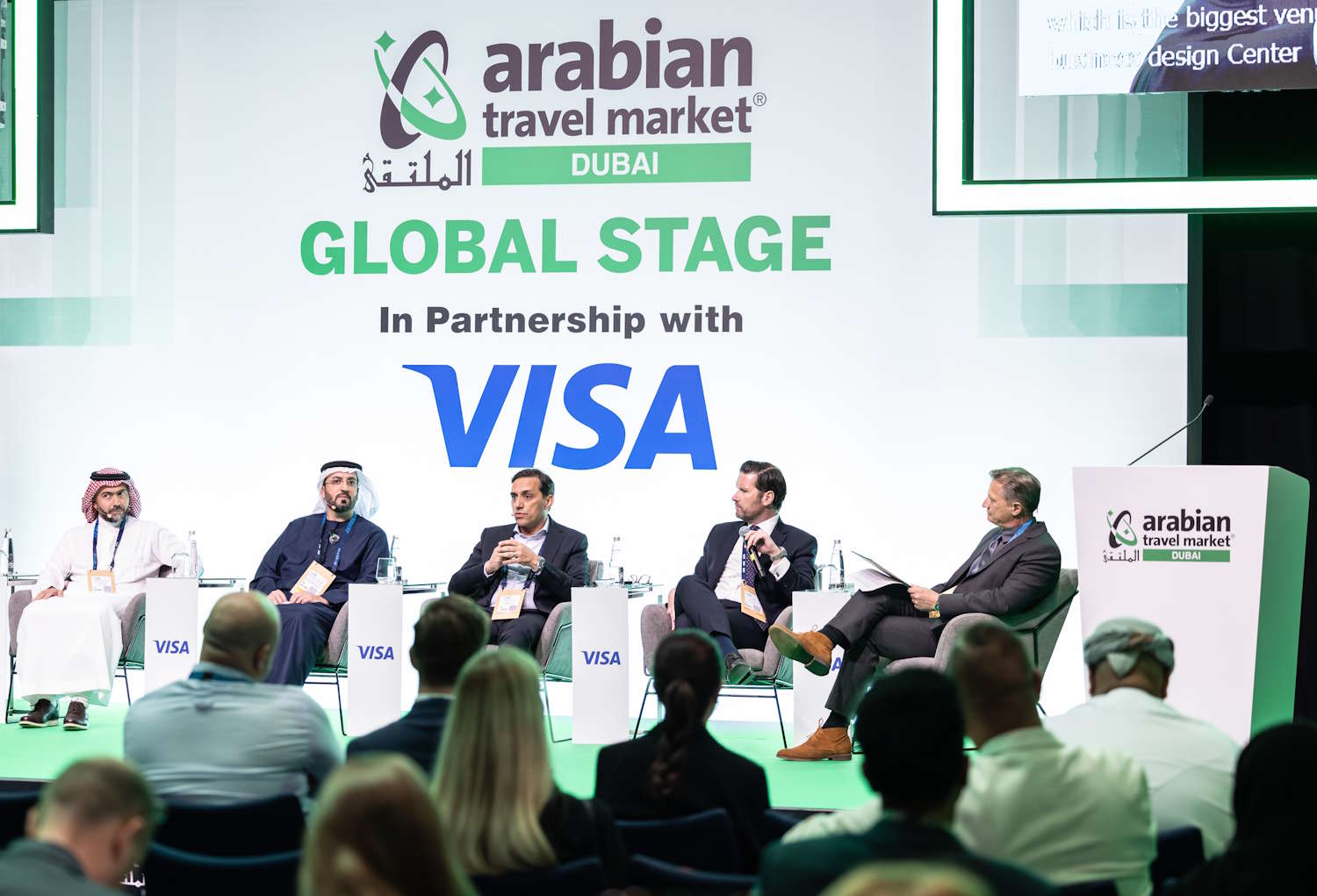
On the Global Stage, Euromonitor International will present The State of Travel:
Inflation, Polycrisis & the New Travel Reality, examining how inflation, geopolitical
uncertainty and changing consumer priorities are reshaping travel demand and
creating new opportunities for destinations and businesses.
STR will contribute two sessions during ATM 2026. Decoding Hospitality Growth –
What Do Today’s Travellers Want?, taking place on the Future Stage, will explore
the evolving expectations of today’s travellers and how hospitality brands can
respond through experience-led strategies.
The team will also host the Hospitality Roundtable: Rebooting Hotel Revenue,
Where to Start? in the Experience Hub, bringing together hospitality professionals
for an interactive discussion focused on practical commercial strategies, operational
resilience and revenue recovery.
“At ATM, our role extends beyond bringing the industry together. We are committed
to providing the insights, research and strategic conversations that help destinations
and businesses navigate change with confidence. By welcoming leading research
organisations such as STR and Euromonitor International, alongside thousands of
industry decision-makers, ATM creates a platform where the global travel community
can move beyond responding to today’s challenges and begin shaping tomorrow’s
opportunities,” added Curtis.
Against a backdrop of evolving market conditions, ATM 2026 will provide one of the
first major global forums where destinations, tourism authorities, hotel groups,
airlines, technology providers and investors can come together to examine the latest
research, exchange practical strategies and identify the opportunities shaping
tourism’s next phase of growth. The event will reinforce Dubai’s position as a global
platform for collaboration, innovation and long-term industry resilience.